

What is Multidisciplinary Team (MDT) Meeting?
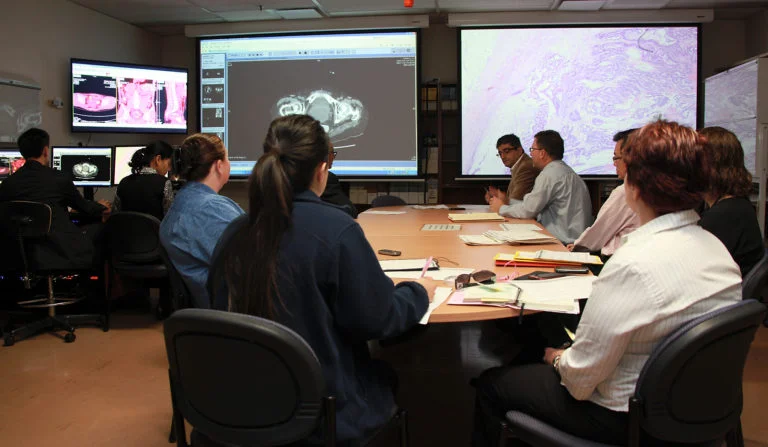
Multidisciplinary team meetings play a pivotal role in the patient care pathway within trusts. These meetings have become a mandatory requirement under the National Cancer Plan to ensure every patient receives a comprehensive evaluation and high-quality standard of care. The radiology department serves as the heartbeat of these meetings because precise medical image reviews form the foundation upon which treatment decisions are built.
This requires all images and reports to be available well in advance of the meeting to enable the radiologist to provide an accurate opinion that protects the patient from any treatment delays. This collaborative methodology helps achieve better patient outcomes, enhances diagnostic accuracy, and effectively implements evidence-based treatment plans, particularly within the rigorous MDT meeting NHS environment.
What is Multidisciplinary Team (MDT) Meeting?
MDT stands for Multidisciplinary Team Meeting. It provides an opportunity for Consultants to discuss complex cases. The principle of an MDT meeting is to discuss patients with other colleagues from the same discipline and where indicates from other specialists in order to ensure the patient is receiving the correct advice and that the treatment is suitable to their individual needs.
The MDT comprises specialist doctors and nurses, who meet regularly to establish that every patient’s diagnosis is correctly made, based on blood and tissue samples, X-rays and scans.
The MDT will then discuss and recommend the best form of treatment based on local and national guidelines and on each individual patient’s circumstances.
MDT meetings may be held at your local hospital, or regionally by video conference to share expertise.
What Happens When MDT Meetings Lack Efficiency?
Manual preparation and traditional meeting management impose enormous administrative burdens on medical teams. Radiologists spend dosens of hours every month searching for and compiling patient data from different systems and preparing them for presentation. This manual effort results in poor meeting efficiency and delays in making vital decisions. Furthermore, the absence or delay of radiological reports jeopardises clinical quality and increases the likelihood of medical errors.
These challenges complicate the MDT coordinator role, which is responsible for organising all this scattered data and determining who attends an MDT meeting to ensure a comprehensive discussion. A lack of trained human resources and resistance from some institutions to adopt technology are additional barriers that make meetings a mere routine procedure lacking real value.
Therefore, overcoming these challenges is crucial to ensuring the success of a multidisciplinary team meeting radiology and achieving maximum benefit for the patient, highlighting the urgent need for effective cancer MDT tools to organise collaborative work.
Who attends MDT meetings?
The following core members of the MDT are required to attend meetings every week or fortnight.
Consultant Haematologists and Specialist Registrars who have instigated investigations to obtain a diagnosis and are responsible for the treatment of patients.
Consultant Radiologists who review and report scans and X-rays to confirm diagnosis and who can advise on further testing, monitoring or management.
Consultant Histopathologists who specialise in blood and bone marrow diseases, who report their findings after examining and testing tissue samples to confirm diagnosis.
Consultant Oncologists who recommend and provide radiotherapy treatment when required.
Advanced Nurse Practitioners who ensure that every patient has a named Key Worker allocated and contribute to discussion of care of patients based on holistic needs assessment.
Research Nurse who ensures that any appropriate patients who might benefit from being entered into a clinical trial are discussed.
MDT Coordinator who organises the meetings and ensures the appropriate information is available for cases to be discussed and documented.
Other members of the MDT may not necessarily attend meetings, but are available to provide advice to the MDT and additional care to patients.
These include:
- Specialist Palliative Care Service
- Surgical Services
- Blood and Marrow Transplant (BMT) Service
- Immunologist
- Clinical Psychologist/Psychiatrist
- Occupational Therapist
- Dietitian
- Physiotherapist
- Cancer Pharmacist
- Teenage and Young Adult Cancer Service
Patients may have their cases referred to the MDT at any time, when significant changes occur and further treatment options need to be considered.
The MDT will take into account patients’ views and individual circumstances. The conclusions and recommendations of the MDT are shared with patients at clinic appointments.
The Role of Technology in Modernising MDT Meetings
Technology represents the radical solution to overcome administrative constraints and enhance collaboration among medical team members. Advanced digital platforms such as the iCode MDT platform allow meetings to be managed with extreme effectiveness through an integrated web interface. This platform automates meeting scheduling and unifies scattered data from Radiology PACS software and medical record systems to provide a comprehensive view of the patient’s condition.
The platform also supports real-time collaboration between regional teams and provides full documentation to ensure fast and accurate decisions are made without the need to navigate between multiple systems, such as separate Radiology worklist software. With the significant shift towards a virtual MDT meeting NHS, these platforms have proven their ability to connect experts from different geographical locations with high efficiency.
Using reliable MDT radiology software ensures reduced wasted administrative time and enables radiologists to discuss a larger number of cases simultaneously. These technologies act as the best tumour board software in the UK by facilitating the work of the MDT coordinator in radiology and ensuring sessions run perfectly smoothly.
Key Differences Between Oncology and Radiology MDT Meetings
Multidisciplinary team meetings in oncology primarily focus on cancer patient care and determining their complex treatment pathway. These meetings bring together oncologists, surgeons, and pathologists to develop a personalised treatment plan based on biomarkers and clinical evidence. Known as a tumour board meeting, these sessions are a collaborative environment for exchanging specialised opinions and identifying appropriate therapeutic interventions.
Meanwhile, meetings within the radiology department focus more on diagnostic aspects, reviewing discrepancies, and ensuring the quality of radiological reports. The radiologist plays a pivotal role in both; in oncology meetings, they provide the critical interpretation of images to confirm the diagnosis and guide surgeons, making an MDT meeting cancer UK an indispensable tool for improving patient outcomes.
The environment of a cancer MDT meeting in radiology requires extreme precision, which is enhanced by using radiology MDT meeting software to provide healthcare based on accuracy and integration in the context of an MDT meeting oncology.
The transition from scattered manual processes to integrated digital solutions is an absolute necessity to ensure the effectiveness of multidisciplinary team meetings in modern healthcare. Specialised software platforms contribute to overcoming administrative challenges and saving radiologists’ precious time to focus on making accurate clinical decisions. By relying on vendor-neutral and intelligent data management technologies, trusts can improve the quality of care, accelerate treatment pathways, and raise the level of coordination among all experts to ensure every patient receives the best possible care.
Are your medical teams wasting time on manual preparation and navigating between different systems? Discover how the iCode MDT platform from Rosenfield Health can revolutionise your meeting management by unifying data, automating tasks, and facilitating accurate clinical decisions. Contact us today to request a demo and take your department’s efficiency to the next level.
FAQs
How long does an MDT meeting last in the NHS?
The duration of the meeting varies based on the number of cases and the speciality. A regional or local prostate cancer meeting can take about three continuous hours to discuss dosens of patients and evaluate their treatment plans accurately.
What is the difference between an MDT meeting and a tumour board?
A multidisciplinary team meeting is a comprehensive term covering the discussion of complex cases across multiple medical specialities. A tumour board represents a specific type of these meetings that focuses exclusively on the diagnosis and treatment of cancer patients.
Can MDT meetings be held virtually in the NHS?
Health institutions increasingly rely on virtual and hybrid meetings to overcome geographical constraints. Studies have proven these virtual models are effective and entirely equivalent to in-person meetings in making sound medical recommendations.
What software is used for MDT meetings in the NHS?
Institutions rely on specialised systems known as MDT software NHS to organise data and display medical images. The iCode MDT platform is one of the most prominent innovative solutions that integrates seamlessly with trust systems to facilitate meeting scheduling and document clinical decisions.
What happens if a patient misses the MDT referral deadline?
Trusts set strict deadlines for receiving referrals. If a patient is referred after the specified deadline, the discussion of their case is postponed until the following week's meeting to give the radiologist sufficient time to review their medical images accurately.
