

Healthcare PACS Solutions
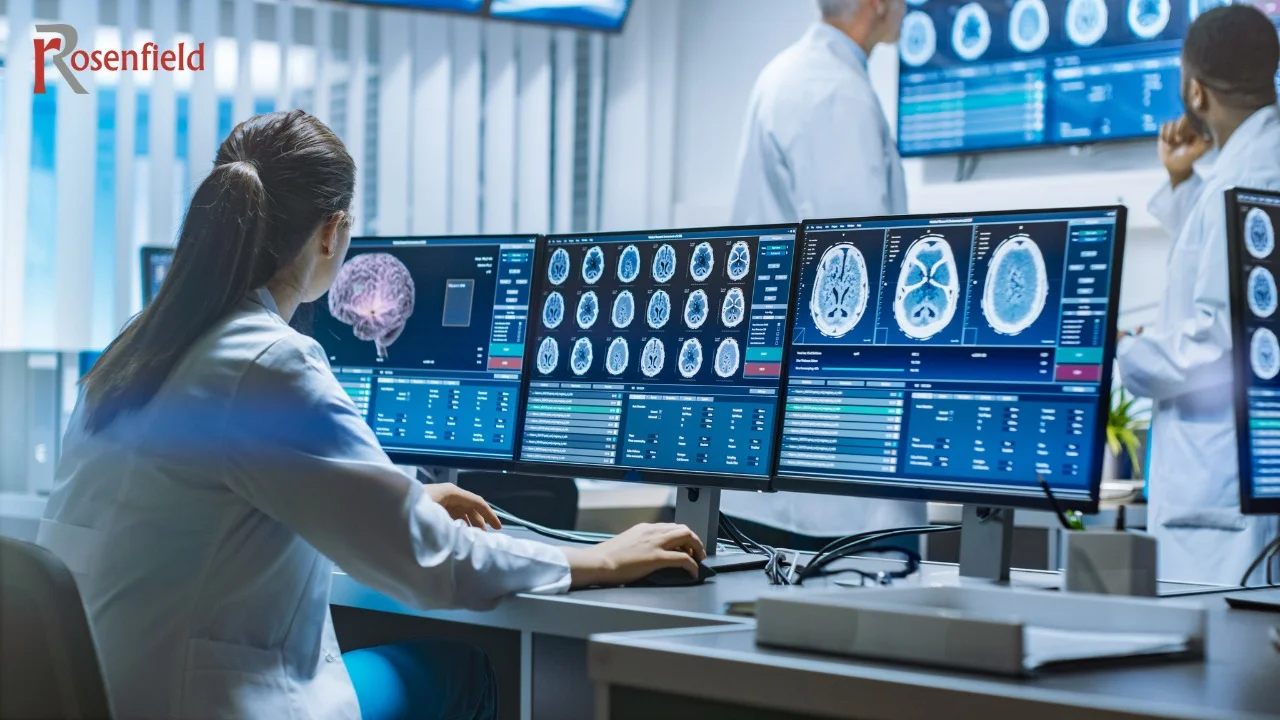
Healthcare systems are witnessing enormous development in digital transformation for improving the quality of medical services provided to patients and facilitating the process of diagnosis and treatment. The existence of PACS is one of the most important basic solutions in managing diagnostic imaging within medical institutions. These systems allow for the storage, retrieval, and sharing of diagnostic images digitally, which eliminates the need for traditional methods based on manual storage. Healthcare PACS solutions also contribute to supporting medical decision-making quickly, so these systems have become a pivotal tool in achieving a modern and accurate medical environment.
What are healthcare PACS solutions?
The PACS pacs as a service is an abbreviation for Picture Archiving and Communication System. It is a digital system used in medical care institutions that allows for the storage, retrieval, and sharing of diagnostic images over a secure network. Healthcare PACS solutions consist of several elements, which are:
- Diagnostic imaging devices: These include X-ray machines, computed tomography (CT), and ultrasound pacs. These devices represent the primary source for producing diagnostic images.
- A secure communication network: It is used to transfer images between departments and doctors within the medical institution, which supports remote access PACS solution for hospitals.
- Image display stations: Doctors use them to view, analyse, and process images, whether inside the radiology department or in specialised clinics.
- An electronic archiving system: It allows for the storage and retrieval of images and reports when needed. The storage process can be local (On-Premises) or through cloud computing, which some healthcare providers rely on by using cloud PACS.
Key benefits of PACS solutions in clinical settings
The application of PACS software solutions has great benefits that directly affect the improvement of the quality of healthcare provided to patients. These benefits are:
Improving work efficiency and speed of diagnosis
The systems allow for quick access to radiological images, which enables radiologists to interpret cases in a short time, reduce waiting periods, and thus speed up the process of making treatment decisions, which enhances the workflow in medical institutions in an organised and accurate manner.
Enhancing collaboration between doctors
Healthcare PACS solutions allow for the process of sharing images and data between doctors across different departments, which facilitates the process of consultation and sharing opinions in complex cases, thus improving the quality of the medical decision.
Enhancing access to an accurate diagnosis
PACS solutions enable doctors to easily compare current images with previous images, which provides an opportunity to identify new changes in the patient’s condition. This function of the PACS system radiology plays a crucial role in ensuring accurate comparisons and preventing the repetition of unnecessary examinations.
Enhancing patient safety
PACS solutions contribute to reaching a correct and accurate diagnosis, and thus providing the appropriate treatment. They also reduce the likelihood of losing old examinations, which raises the level of safety and quality of healthcare.
Reducing operational costs
Although there is an initial cost to implement healthcare PACS solutions, healthcare providers using cloud or on-premises PACS benefit from reducing the costs related to printing films, developing materials, and storage.
Vendor-Neutral Solutions: A Necessity for the Future
What is meant by vendor-neutral PACS in medical imaging is that the provided PACS should be able to work and integrate with devices and software produced by different companies, without relying on only one vendor. The importance of this condition is that it allows medical institutions to choose the appropriate technologies for them, whether in purchasing imaging devices or using advanced applications based on artificial intelligence and others.
This approach also helps in reducing the problem of complete dependence on a single vendor (vendor lock-in), and also allows for the scalability and updating of the imaging infrastructure in the future. This approach can be easily observed in many cloud based PACS solutions UK, where open systems are used to strengthen the flexibility of the digital structure and achieve greater integration between medical institutions in a smooth and accurate manner.
Cloud vs on-premises PACS in healthcare
When implementing healthcare PACS storage solutions, institutions face an important decision regarding how to store data. It can be stored within the hospital on local servers (On-Premises), and it can also be stored via cloud-based PACS healthcare providers. The following is an explanation of these models:
On-Premises PACS
In this type, servers and technical components are used to store data within the medical institution itself, which gives the IT department full control over the digital structure and data security methods. However, this model requires a large financial investment to purchase and maintain the devices periodically, in addition to the need for technical staff to manage the system.
Cloud-Based PACS
This model relies on storing data on servers outside the medical institution, which reduces the initial costs related to the digital infrastructure of the devices. This model is characterised by its scalability as the data volume increases, and the maintenance burdens are also reduced. The most important feature is that it allows for remote access to hospitals, where doctors can access images and reports from any compatible location or device.
Hybrid model
This model is considered a middle option, where the most recent images are stored locally, which allows for quick access to them, while old studies are transferred to cloud storage. This combines operational efficiency as well as cost reduction in the long run.
Security & compliance in healthcare PACS
With the expansion of the exchange of medical data between departments and medical institutions, the need to secure information and ensure the confidentiality of patient-related information has increased. Accordingly, PACS for healthcare must adhere to precise standards such as the Health Insurance Portability and Accountability Act (HIPAA) applied in the United States, which sets controls for data protection.
There are many ways to secure data, such as using strong encryption technologies during data transfer or storage in the electronic archive. Also, implementing access controls that depend mainly on the job roles within the institutions, where only specialised people are allowed to view medical images, with the presence of continuous monitoring systems for the networks.
The PACS integration with EHR/RIS in healthcare is a very important step in this aspect, which allows for the unification of data in a secure environment, which facilitates access to it and ensures the preservation of patient privacy and the security of their data.
Integrating PACS with other hospital systems (HIS, EHR, RIS)
To ensure that healthcare PACS solutions is as beneficial as possible in the medical institution, one has to integrate it with a variety of systems including:
- Radiology Information System (RIS): It enables scheduling of patients in the radiology department, control of the reports and their connection with medical images.
- Hospital Information System (HIS) and Electronic Health Record (EHR): Doctors have an opportunity to get the whole picture of the patient condition, where he can look at the medical images on the patient file. The doctor is able to come up with the better treatment plan by accessing his medical and treatment history of the patient.
It is through this integration that it can rely on the use of common communication standards like the DICOM as the standard language of the storage and transfer of data and the HL7 standard that is charged with the responsibility of transferring data between various health systems. Such integration also supports the efficiency of Peer Review in Radiology, ensuring that medical images and reports are easily accessible for accurate evaluation and quality improvement.
Case studies: NHS trusts using PACS solutions
The most notable example of the implementation of PACS solutions in healthcare and enhancing the quality of healthcare in the hospital, including Guy’s and St Thomas’ Hospital, is the first hospital in England to implement a fully cloud-based PACS, which is the British National Health Service (NHS). This eased the pressure on the IT officials of the hospital and the productivity of doctors also went up by up to 10 percent. It was also keeping data confidential and secure, thus avoiding interventions by the WannaCry ransomware attack that has been inflicting many other hospitals.
Moreover, in 2024, Greater Manchester Diagnostic Network started to deploy a single PACS solution in a number of hospitals. It was not only a system that shows images, it also enabled one to write reports in its own system and this significantly saved time consumed in writing reports. It also enabled the medical staff to collaborate in various institutions through sharing of expertise in these systems. All these assisted in improving the medical service offered to the patients based on the efficiency and precision of diagnosis and subsequent selection of the suitable treatment.
Choosing a healthcare PACS vendor: criteria & checklist
In order to make the choice of the right PACS, one should consider several fundamental requirements that should be followed when making the choice, which are:
The simplest capabilities of the PACS
- The system should be able to store and retrieve data with the help of DICOM pacs software standards or any other and this is a crucial component of the healthcare image archiving solutions.
- An image viewer should be selected, which is web-based (Zero-Footprint) and does not require any programme to be installed. It should also be vendor-neutral in order to allow it to be incorporated with other systems.
- Ideally, the system should have intelligent applications of case allocation and sharing among the specialised physicians.
The vendor evaluation criteria
- Its system must be transparent and simple to interact with and it is more preferable to speak with real users rather than just using demonstrations.
- It should be made sure that there is constant assistance to the system and also complete training to the users.
- The vendor should comply with security and privacy requirements particularly when relating to healthcare providers under cloud healthcare PACS solutions.
- The system should bear the concept of expansion that needs a flexible and scalable digital structure.
- The entire cost should be taken into account and it should include not only the purchase cost of the product but also include maintenance and training costs and any other requirements of the product.
Conclusion
Healthcare PACS solutions is considered to be one of the basic steps to the creation of the medical imaging system and provision of access to the clinical information which is more accurate. As PACS programmes evolve and cloud models emerge, healthcare providers who adopt cloud PACS have an opportunity to optimise the workflow and provide the collaboration of various departments and medical institutions both within the institution and with larger companies. This helps in making the right treatment choices promptly and therefore medical services given to patients become better. Transform your medical imaging workflow with Rosenfield Health’s advanced PACS providers amd solutions — designed for seamless integration, secure data access, and improved diagnostic efficiency. Explore PACS solutions at Rosenfield Health today.
FAQs
What does PACS stand for in healthcare?
PACS is the term used to denote Picture Archiving and Communication System. It is an electronic file that is used to store, view and share medical images as opposed to using paper films which reduces the time and effort in accessing patient data and also makes accessing patient data more secure.
Why use cloud-based PACS in hospitals?
Cloud PACS are adopted in hospitals since they save the expenses of hardware and maintenance. They also permit a flexible access to pictures and information and also facilitate communication among all the dissimilar medical institutions. They also are expandable at a faster and easier rate with the increase in data volume.
