

How AI is Used in Radiology?
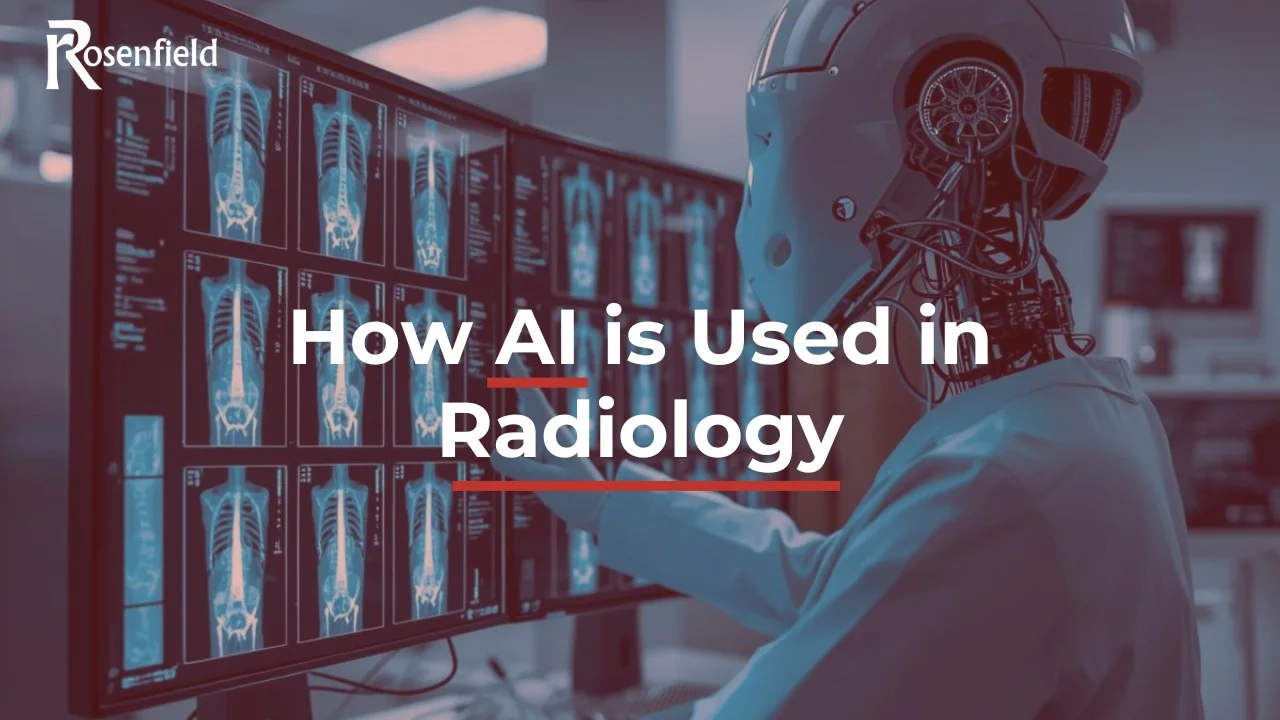
Artificial intelligence has become a pivotal part of the medical field and the development of its technologies, particularly in radiology, which relies heavily on accuracy and the speed of disease detection. As interest in AI increases globally, the question “How is AI used in radiology?” has become one of the most common inquiries among radiologists. Advanced AI algorithms are now offering a radical transformation in data and image analysis, supporting radiologists in making diagnostic decisions as well as reducing the time spent on workflows.
Key AI applications in radiology today
AI applications in radiology UK are expanding, becoming an essential part of diagnosing diseases and analysing medical images in modern trusts. These advanced technologies help radiologists improve accuracy, accelerate case assessment, and support medical decisions in real-time. The most prominent applications today include:
Lesion Detection:
AI algorithms have the ability to identify abnormal areas, such as pulmonary nodules or very minute fractures.
Image Segmentation:
This involves automatically drawing the boundaries of organs or tumours with high accuracy to facilitate treatment planning.
Classification and Triage:
By sorting incoming cases and alerting the doctor to images that show critical issues.
Quantitative Analysis:
This involves extracting precise measurements, such as tumour volume or tissue density, to assess disease progression.
Diagnostic imaging enhancements via AI
With the rapid progress in medical automated imaging diagnostics technologies, understanding how AI is used in radiology has become essential. With the expanding role of AI for image interpretation in radiology, a set of fundamental improvements has emerged that are directly reflected in the patient experience and diagnostic efficiency. Below, we mention the most important of these improvements:
Improving Image Quality:
Modern algorithms work to reduce artefacts and enhance contrast and resolution, providing clearer images that help doctors make more confident decisions.
Accelerating the Imaging Process:
AI technologies contribute to reducing examination time and speeding up image capture, which reduces the likelihood of errors resulting from patient movement and improves their experience inside the imaging room.
Reducing Radiation Dose:
Specifically in CT scans, high-quality images can be reconstructed using lower doses of radiation, providing greater protection for the patient without affecting diagnostic details.
The Impact of AI on Radiology Workflow Efficiency
Artificial intelligence is creating a major transformation in the AI-Driven Workflow in Radiology departments. Therefore, the world has begun to focus on learning its technologies, such as machine learning in radiology diagnostic. With the use of these technologies, they have started playing a major role in reducing the daily burden on radiologists. By automating routine tasks such as measurements, preparing draft reports, as well as retrieving previous studies for comparison with current ones, this alleviation of repetitive tasks allows the radiologist to focus on complex cases and make precise clinical decisions, increasing productivity and reducing professional burnout rates within the speciality.
AI in oncology imaging vs general radiology
The comparison between oncology imaging and general radiology illustrates how AI is used in radiology in ways that differ in depth and precision depending on the type of examination. Although applications are widespread across various specialities, the impact of AI appears clearer in the field of oncology due to its need for detailed analysis and precise follow-up of the condition over the long term, especially with the development of AI radiology tools for cancer detection. The most prominent differences include:
In Oncology Imaging
AI plays a significant role in detecting and imaging tumours through:
- Supporting early cancer detection by analysing small nodules and identifying masses with high accuracy.
- Tumour segmentation for more precise treatment planning.
- Monitoring tumour progression and response to treatment via precise quantitative measurements.
- Enhancing personalised medicine thanks to radiomics technologies that link image characteristics to biological characteristics.
In General Radiology
AI also plays a major role in general radiology, not just in oncology, by:
- Performing simple binary tasks such as identifying the presence of a fracture or haemorrhage.
- Improving clinical triage and prioritisation in emergencies.
- Increasing work efficiency without the need for complex analyses like those required in oncology.
Using Radiomics for Advanced Medical Image Analysis
Radiomics represents one of the most developed trends in medical image analysis, as it relies on using advanced algorithms to extract large amounts of precise quantitative data from images that the human eye cannot perceive. When integrating these characteristics with clinical or genetic data, radiomics allows a deeper level of understanding of the disease and supports radiologists in making accurate decisions based on broad data. Its most prominent applications include:
Predicting Clinical Outcomes:
By estimating the probability of disease recurrence, response to treatment, or survival rates.
Non-invasive Diagnosis:
By helping to distinguish between types of tumours without the need for a biopsy.
Supporting Personalised Medicine:
By designing customised treatment plans based on the precise biological characteristics of each tumour.
Key Challenges to Implementing AI in Radiology
Despite the increasing expansion in use cases of AI in radiology departments, the full implementation of this technology within clinical practice still faces a set of complex challenges. We mention the most important ones below:
Data Quality and Bias
AI algorithms rely directly on the quality and diversity of training data. When there is a lack of representation or the presence of bias, real-world performance accuracy may deteriorate, which could lead to widening health disparities between patients.
Data Preparation Challenges for AI
Before using images to train models, their identity must be completely removed (anonymised) to protect patient privacy. This step can be slow with large amounts of data. Here, the role of specialised tools like BriX emerges, which facilitates anonymisation quickly and accurately, providing secure data for training models.
Difficulty Integrating with Current Systems
Integrating modern AI tools with legacy PACS and RIS systems represents a major challenge, especially when these tools require additional steps that might disrupt the workflow. Hence the importance of vendor-neutral orchestration platforms like PAIP, which act as a bridge to integrate AI solutions seamlessly without disrupting the system.
Regulatory and Ethical Hurdles
AI tools require strict regulatory procedures, in addition to concerns regarding interpretability, algorithm transparency, data protection, and liability when errors occur. This makes the existence of a clear governance framework a prerequisite for the ethical use of smart technologies.
Case studies: successful AI deployments in UK radiology
Case studies in the United Kingdom show a practical example of how AI is used in radiology to provide more accurate and efficient healthcare, while maintaining the ethical AI usage in radiology to ensure transparency, fairness, and patient data protection. This approach has enabled health institutions to achieve tangible results in improving diagnostic quality. Among the most prominent successes in this context are:
Widespread Adoption within the NHS:
More than 60% of National Health Service (NHS) trusts today use AI systems to analyse mammogram images, leading to a reduction in the diagnostic error rate by about 20%.
Improving Access to Specialised Care:
Teleradiology services supported by AI have contributed to bringing advanced care to more than 90% of remote areas, bridging important gaps in service delivery.
Supporting Clinical Decisions:
AI algorithms provide radiologists with accurate and fast analyses, enhancing the quality of clinical decisions without compromising the ethical principles of medical data governance.
Conclusion
Understanding how AI is used in radiology is no longer a theoretical matter, but has become essential in the future of medicine, especially in the field of radiology. With the development of AI technologies, health institutions can now enhance diagnostic quality as well as raise departmental efficiency. Accordingly, the role of AI in radiology workflow improvement is highlighted, as it contributes significantly to reducing administrative burdens and enabling radiologists to focus on the most important clinical decisions. Therefore, AI can be considered a clinical assistant to the radiologist, not a complete replacement for them.
👉 Contact us at Rosenfield Health or book a demo to discover how AI-ready workflow solutions can help your radiology department improve efficiency, accuracy, and clinical confidence.
FAQs
What are the main uses of AI in radiology?
The primary uses of AI include supporting the accurate detection and identification of diseases, quickly prioritising critical cases, alongside automating routine tasks such as measurements and draft reports. It also contributes to improving image quality and predicting disease progression and treatment response with higher efficiency.
Can AI replace radiologists?
No, rather current evidence indicates that AI supports and enhances the work of the radiologist. Clinical judgement, human expertise, and the integration of the patient context remain an indispensable part, making the future based on effective collaboration between humans and machines.
