

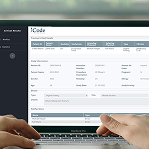
DICOM PACS software in Radiology

Medical imaging systems are an information system that contributes to diagnostic accuracy, decision-making, and clinical care quality, not simply tools for generating images. Here, DICOM PACS software emerges as a fundamental pillar for ensuring the comprehensive and secure management of the medical imaging lifecycle. This starts from the moment of creation until clinical or research use, thereby providing full safety for patients while improving accuracy and efficiency.
What is DICOM PACS software?
DICOM PACS software consists of two essential components:
DICOM
Digital Imaging and Communications in Medicine is the unified language that allows various medical imaging devices to communicate with each other without any technical barriers. It is the global standard that helps in creating, storing, and exchanging medical images.
PACS
Picture Archiving and Communication System is responsible for archiving images and making them available, managed, and shared in a secure and effective way. Thus, PACS acts as the central store where all imaging studies are kept for reference at any time.
DICOM PACS software
It refers to the software solutions that combine these two concepts. They comply with international standards to enable health institutions to store, view, receive, and analyse medical images, and share them with full accuracy and efficiency, regardless of the device manufacturer.
Basic Components of the DICOM Standard
The DICOM standard does not only provide visual images; it is an integrated data container made of two elements:
- Image Data (Pixel Data): This is the medical image itself, whether it is a slice from an MRI scan or an X-ray image.
- Metadata or DICOM Tags: These are a set of digital tags that provide highly important detailed information, such as:
- All patient data like name, date of birth, and age.
- Details of the examination, such as the type of exam, date, and the doctor’s name.
- Device information like imaging settings and the manufacturer.
The DICOM standard contributes to facilitating search, retrieval, and management processes with extreme accuracy by organising data in a logical hierarchy: Patient → Study → Series → Image.
DICOM Network Protocol: How do medical devices communicate?
The DICOM standard helps in coordinating files and also defining network protocols for exchanging data between different systems and devices through standard commands, which include:
- C-STORE: Transfers images to the PACS.
- C-FIND: Searches for studies in the PACS.
- C-MOVE / C-GET: Retrieves images from the PACS.
- C-ECHO: Tests the connection between devices.
Open-source vs commercial DICOM PACS solutions
When evaluating a PACS system, institutions face two main choices:
Open source DICOM PACS software
These are systems where the source code is publicly available and can be used and downloaded for free. Notable examples include Horos and WEASIS.
Pros:
- Low cost
- High flexibility for customisation
Cons:
- Require advanced technical expertise
- Interfaces may be less mature in some cases.
Commercial Solutions
These are secure DICOM healthcare PACS solutions developed by specialised companies.
Pros:
- Continuous technical support
- Professional user interfaces
- Regular updates
Cons:
- Relatively high maintenance costs
- Licensing fees.
How to choose DICOM PACS software for hospitals
When choosing the best DICOM PACS software UK or elsewhere, a comprehensive strategic assessment is required, considering the institution’s needs and future plans. Therefore, a deep understanding of the nature of PACS software solutions and certain standards must be considered, including:
- Workflow needs: You must first know the actual nature of the system’s use. Does the institution need an integrated solution or a platform to view medical images? Is the DICOM compliant PACS software?
- Cloud vs. Local Solutions: web-based DICOM PACS software and cloud DICOM PACS software providers offer the ability to access images easily while achieving high flexibility and lower maintenance costs.
- Ease of use: The system must have an interface that serves local doctors, radiologists, and various clinical staff. An effective system helps reduce training time and improves the user experience without technical complexities.
- Integration capabilities: You must ensure the software integrates with trust systems, including the Electronic Health Record (EHR) and the Radiology Information System (RIS).
- Technical support: Due to the importance of technical support, you must ensure a support system is provided with a fast response, as any system downtime negatively affects the quality of healthcare.
Security & compliance in DICOM PACS software
There is no doubt that DICOM files contain protected health information. Therefore, commitment to full privacy and security standards is a regulatory and legal necessity. The system must include:
- Advanced encryption for data, whether the data is being transferred over the network or stored.
- Strict access controls to ensure only authorised persons access patient data.
- Detailed audit logs through which those attempting to access data can be tracked and identified.
What Happens When Your PACS Goes Down? Downtime Planning and Disaster Recovery
For any radiology department, PACS downtime is not a theoretical risk — it is an operational certainty that every trust needs a plan for. When a PACS system becomes unavailable, whether due to a server failure, a cyberattack, or a planned maintenance window, the impact is immediate: radiologists cannot access prior studies, reporting workflows stop, and clinical decisions get delayed.
Effective downtime planning starts before an incident occurs. This means maintaining a downtime viewer — a lightweight, read-only system that gives radiologists access to recently acquired studies even when the main PACS is offline. It also means ensuring that critical prior imaging is cached locally so that on-call teams are not left without reference studies during overnight or weekend outages.
Disaster recovery goes further. A well-configured PACS environment should replicate data to a secondary site or cloud environment in near real-time, with clearly defined recovery time objectives (RTOs) and recovery point objectives (RPOs) agreed with the vendor before go-live. For NHS trusts, these commitments should be contractually specified — not assumed.
The question to ask any PACS vendor is not just “how reliable is your system?” but “what exactly happens when it fails, and how long before full service is restored?”
Remote Reporting and Teleradiology: What Your PACS Needs to Support It
Remote reporting has moved from exception to standard practice across NHS radiology. Whether supporting on-call radiologists working from home, cross-site reporting within an imaging network, or formal teleradiology arrangements, the PACS infrastructure underpinning remote access is now as clinically important as the reporting workstation in the department itself.
For remote reporting to work effectively, a PACS must deliver diagnostic-quality image rendering through a web-based viewer without requiring locally installed software — eliminating the dependency on a specific workstation or operating system. Prefetching and intelligent worklist management become critical at this point: a radiologist reporting remotely should not be waiting for large DICOM studies to load before they can begin work.
Beyond image access, remote reporting requires robust audit trail functionality. Every access event — who viewed which study, from which location, and at what time — must be logged and retrievable. Under UK GDPR and NHS data security standards, this is not optional.
Trusts evaluating PACS software for remote or multi-site use should specifically assess zero-download viewer performance, VPN compatibility, and whether the system supports role-based access controls that can be applied at a user level rather than just a site level.
Importance of DICOM Anonymisation for Research and AI
Developing AI algorithms and using medical images in scientific research has become increasingly necessary. However, this requires removing all identifiable patient information. DICOM file anonymisation technology is an essential element in achieving this goal. It allows for processing large volumes of medical images, removing sensitive data with high accuracy while maintaining the research value and quality of the images.
Brix plays a key role here, providing effective and fast solutions for anonymisation at scale, thereby supporting research, innovation, and compliance with all regulatory requirements.
Read More: How to Choose the Best DICOM Anonymiser for Medical Imaging
Integration with imaging modalities & AI tools
DICOM PACS software systems need high flexibility in connection and integration to communicate with all imaging devices regardless of the manufacturer. They also need the ability to support and integrate AI tools and display intelligent analysis results as an additional layer on medical images.
Common Challenges when dealing with DICOM for beginners
Although DICOM is a global standard, dealing with it can face some challenges, including:
- Large file sizes: Large files need advanced storage solutions and transmission methods.
- Private tags: Manufacturer-specific tags can lead to problems and incompatibility between files and other systems.
- Standard complexity: Because DICOM contains thousands of pages, it is difficult to grasp all its aspects easily.
Migrating from One PACS to Another: What You Need to Know Before You Switch
Switching PACS systems is one of the most operationally complex projects a radiology department will undertake. The imaging system itself is rarely the difficult part — the challenge is the data: decades of historical studies, each carrying patient demographics, metadata, and clinical context that must arrive in the new system intact and accessible from day one.
The most common failure point in PACS migrations is underestimating the archive. Departments often discover that legacy data is stored across multiple media types, that metadata is inconsistent between older and newer studies, or that certain modalities have written non-standard DICOM tags that the destination system does not recognise. Identifying these issues during a pre-migration audit — rather than mid-transfer — is the difference between a managed transition and a clinical incident.
A successful Data migration in Healthcare requires parallel running: both systems operational simultaneously during a defined transition period, allowing radiologists to access historical studies in the legacy system while new acquisitions go directly into the replacement. Decommissioning the old system before the migration is fully validated is one of the most avoidable causes of data loss in NHS imaging.
Finally, vendor lock-in is a risk that should be assessed before signing any PACS contract. Migrating into a proprietary archive format makes the next migration significantly more expensive and complex. Vendor-neutral archive (VNA) solutions, built on open DICOM standards, protect trusts from this dependency and make future system changes considerably more manageable.
Conclusion
DICOM PACS software represents the cornerstone of the modern medical imaging system, combining diagnostic accuracy, ease of management, and data security. Choosing the right system, while considering integration, security, and scalability, ensures improved healthcare quality and supports future medical innovation.
At Rosenfield Health, we understand the complexity of building and maintaining a high-performing imaging infrastructure. Whether you are evaluating a new PACS, planning a migration, or looking to strengthen your department’s data security and compliance, our vendor-neutral solutions are designed to support NHS trusts at every stage. Get in touch with our team to find out how we can help.
FAQ
Why is DICOM compliance important?
The importance of the DICOM standard lies in ensuring that devices and software can communicate even if the manufacturers are different. It allows for sharing data and images without complications, enabling trusts to build an integrated ecosystem. This is the basis of interoperability in medical imaging.
Is open-source DICOM PACS software safe?
It can be said that they are safe if managed and set up correctly, but they require internal technical expertise to apply security policies and ensure continuous updates. The responsibility lies with the institution that installs and maintains it.
Can DICOM PACS software be used via cloud?
Yes, it is possible, as cloud solutions have become a common choice due to their flexibility, scalability, and lower operating costs.
What to look for when selecting DICOM PACS software?
There are many factors to consider, including the balance between ease of use, clinical functions, scalability, and integration.
How many DICOM images can a PACS store?
Modern PACS systems have no fixed storage ceiling — capacity scales with the underlying infrastructure. Cloud-based and hybrid solutions address growing imaging volumes by scaling storage dynamically, without requiring hardware upgrades.
What is the difference between PACS and VNA?
A PACS is the primary system radiologists use for day-to-day image viewing and reporting. A VNA (Vendor-Neutral Archive) is a long-term storage layer that holds data in open DICOM format, independent of any single vendor. The difference matters most when switching systems — data in a VNA migrates cleanly to a new PACS without costly format conversion.
Can PACS integrate with AI diagnostic tools?
Yes. Modern PACS platforms support AI integration through DICOM-native workflows, allowing algorithms to receive studies, process them, and return results — detection overlays, priority flags, or structured findings — directly within the radiologist's reporting environment.
What is DICOM worklist and why does it matter?
A DICOM Modality Worklist (MWL) pushes scheduled patient and exam information from the RIS to the imaging modality before acquisition begins. Without it, technologists enter demographics manually — introducing transcription errors and patient identity mismatches that create downstream clinical risk.
How long should PACS retain imaging studies under NHS guidelines?
Adult imaging records should be retained for a minimum of eight years from the date of last treatment. For children, records must be kept until the patient's 25th birthday. Oncology and other specialist cases may carry longer retention requirements depending on clinical context.
know more about:
