

The Best Radiology Peer Review Programme for NHS Trusts

Ensuring diagnostic quality in radiology departments relies on a formal radiology peer review programme to evaluate the accuracy of medical reports, where a qualified radiologist reviews a colleague’s report and matches it with the available medical images to discover any errors. These discovered errors turn into educational opportunities that raise the efficiency of the entire medical staff when applying peer review radiology reporting systematically. Trusts are currently working on automating these procedures and integrating them into the daily workflow to ensure their sustainability and directly improve healthcare outcomes.
Why Every NHS Radiology Department Needs a Formal Peer Review Programme?
National Health Service Trusts face a pressing need to implement formal review programmes to ensure the provision of safe patient care. Medical research shows a variation in diagnostic discrepancy rates between 2% and 30% depending on the methodology of each study, and radiology discrepancy rate UK reaches 7.7% according to comprehensive meta-analyses. This variation imposes the necessity of having a strict and continuous monitoring system to detect diagnostic discrepancies early. The directives of the Royal College of Radiologists oblige departments to document individual and institutional performance periodically to protect patients from medical errors.
Key Components of an Effective Radiology Peer Review Programme
The success of any radiology quality assurance programme NHS and the interaction of doctors with it requires the availability of clear structural and cultural components. These components branch into essential elements that ensure the sustainability of the process:
- Establishing a peer learning culture by providing a work environment that supports transparency and avoids directing blame at individuals to encourage doctors to discuss complex cases freely.
- Applying advanced software mechanisms that ensure hiding the identity of the report writer doctor and the reviewing doctor to prevent any personal or professional bias during the clinical evaluation.
- Providing a system that sends evaluation feedback automatically and quickly to the original report writer to achieve the educational goal of the review and correct any treatment pathway immediately.
How to Select Cases for Peer Review: Random vs Targeted Sampling
Trusts use two main strategies to select cases and conduct a peer review audit radiology to ensure the comprehensiveness of the clinical evaluation:
Random Sampling
This method provides an objective picture of the performance of the department as a whole by pulling a specific percentage of daily reports automatically by the electronic system. The random sample prevents the bias of doctors in picking easy and fast cases for review with the aim of saving time.
Targeted Sampling
This method focuses on certain sub-specialities or complex scans to evaluate the performance of newly graduated doctors. Leading Trusts use a mixture of the two methods to maintain diagnostic quality in routine and complex cases.
Setting Discrepancy Thresholds and Metrics That Actually Mean Something
Radiology departments need precise and practical metrics to evaluate the discrepancies between original reports and review reports. Current best practices in London Trusts rely on moving beyond old systems with simple numerical scores that studies proved their unreliability and their great reliance on personal evaluation. Institutions are moving towards using detailed scientific metrics such as true positive, true negative, false positive, and false negative TP TN FP FN. These advanced metrics provide objective data that helps in designing customised educational programmes to address the weaknesses of radiologists accurately.
Common Mistakes NHS Trusts Make When Setting Up Peer Review
Many Trusts fall into systematic mistakes when establishing peer review programmes which empties them of their educational content. These organisational mistakes include the following:
- The absence of complete anonymity which leads to the reluctance of doctors to report important discrepancies for fear of embarrassing their colleagues or superiors.
- Transforming the review process into a routine administrative procedure or a tool for fault-finding and ignoring its primary role as a scientific platform for peer learning.
- Failing to provide automatic feedback to the original report writer and depriving him of the opportunity to know the error and avoid repeating it in the future.
- Ignoring allocating a specific time for doctors to conduct reviews and making it an additional burden they practice in their limited free time.

The Role of Digital Tools in Making Peer Review Sustainable
Advanced digital tools contribute to the sustainability of peer review programmes inside the fast-paced healthcare environment. Peer review software radiology NHS automates the process of pulling cases and distributing them randomly to reviewing doctors to save long hours of manual administrative work. These technical solutions integrate the review process smoothly inside the daily workflow of the radiologist and eliminate the need to navigate between multiple systems or screens. Modern digital platforms provide analytical dashboards that allow department managers to monitor compliance rates and identify recurring patterns of diagnostic errors.
How iCode Peer Review Helps NHS Trusts Build a Programme from Day One
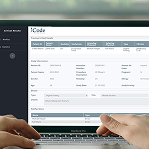
Trusts require integrated technical solutions to establish strong and reliable review programmes from day one. The iCode Peer Review platform from Rosenfield Health provides a comprehensive digital solution designed to improve the quality of radiology reports by fully automating the peer review process. This platform is characterised by strong clinical features including:
- Providing complete anonymity for doctors and patients according to strict DICOM standards to ensure an objective evaluation environment free of professional bias.
- Direct and smooth integration inside existing Healthcare PACS solutions systems to provide a simple user experience that supports unified authentication to facilitate quick entry.
- Allowing the customisation of scorecards to align completely with the standards of the Royal College of Radiologists and the American College of Radiology.
- Providing an anonymous chat feature that allows discussing medical notes and resolving them quickly and effectively to support continuous education.
How can I implement a radiology peer review system in my Trust’s workflow?
Implementing the system successfully requires precise knowledge of the steps on how to implement peer review in radiology to ensure its integration with the work environment. These practical steps are represented in the following:
- Defining the goals of the programme accurately and choosing a specialised software platform that integrates smoothly with current PACS and RIS systems to prevent the occurrence of any disruption in daily operations.
- Allocating a specific and deducted time within the work plans of radiologists to conduct these reviews to ensure they do not conflict with their core clinical tasks.
- Establishing clear administrative protocols that determine the percentage of cases to be reviewed and the mechanism of dealing with discovered discrepancies according to the approved clinical governance procedures in the Trust.
- Providing comprehensive training for all users on the new system with continuous emphasis that the primary goal is shared learning and knowledge exchange and not punitive evaluation.
Which companies offer cloud-based radiology peer review solutions?
Healthcare administrators look for technology providers who possess a deep understanding of clinical workflow needs and medical compliance standards. Leading companies in this field are characterised by providing vendor-neutral cloud solutions capable of adapting to the diverse infrastructure of Trusts.
The ability to provide smooth integration, advanced data protection, and complete anonymity is considered one of the most important criteria that determine the efficiency of these companies in the market. Rosenfield Health tops this field by providing innovative and reliable solutions through its iCode Peer Review platform that meets all complex requirements and provides a safe educational environment for radiologists to sustainably improve diagnostic quality.
Conclusion
Establishing any automated radiology peer review programme is a direct investment in healthcare quality and patient safety inside any medical institution. These programmes contribute to getting rid of the burdens of manual review and reducing diagnostic errors by providing an educational environment that relies on transparency. Radiology departments can ensure their commitment to the highest clinical standards and achieve a tangible improvement in the accuracy of reports by relying on modern technologies that integrate smoothly with the daily workflow.
Is your department looking for an effective and automated way to ensure the quality of its diagnostic reports and compliance with medical standards? Contact us today to request a demo for the iCode Peer Review platform from Rosenfield Health and discover how we can fully automate the review process and provide complete anonymity to elevate the efficiency of your radiology department. Ready to automate your quality assurance? [Contact Rosenfield Health to request an iCode Peer Review demo]
FAQs
What percentage of reports should be peer reviewed in radiology?
Medical studies and clinical trials recommend reviewing approximately 5% of total radiology reports as an ideal percentage that balances ensuring the quality of healthcare and not exhausting the medical staff. This percentage requires adding only a few minutes to the work of the radiologist weekly when using automated systems that facilitate the process of random pulling of cases.
How do you measure success in a radiology peer review programme?
The success of the programme is measured by tracking continuous improvement in the accuracy of radiological reports and the decrease in gross diagnostic error rates over time. The commitment of doctors to participate effectively and use feedback in developing their clinical skills is considered a strong indicator of the effectiveness of the programme and its achievement of its educational goals.
What is the RCR standard for peer review in the NHS?
Medical directives include applying the RCR quality standard imaging which recommends integrating peer review as a routine part of daily clinical practice and allocating sufficient time for doctors to avoid errors resulting from work pressure. The recommendations point to allocating about two minutes to review each case or reviewing approximately five cases in each work session to ensure evaluation accuracy and document any difference in medical opinion.
How does peer review software reduce radiologist workload?
Specialised software automates the tasks of selecting cases and distributing them randomly which eliminates the need to collect data manually and saves hours of administrative work. These programmes integrate directly with medical image display systems to allow the doctor to conduct the review and record his notes in the same screen and send automatic notifications and feedback instantly.
What are the top-rated digital platforms for radiology peer review in the UK?
Top-rated digital platforms are characterised by their ability to provide advanced data anonymisation and smooth integration with Trust systems and support for approved medical standards. The iCode Peer Review platform is considered the exemplary solution that embodies all these technical and clinical standards to provide an automated work environment that helps radiology departments raise diagnostic accuracy efficiently and professionally.
