

DICOM Anonymisation Tools for Radiology
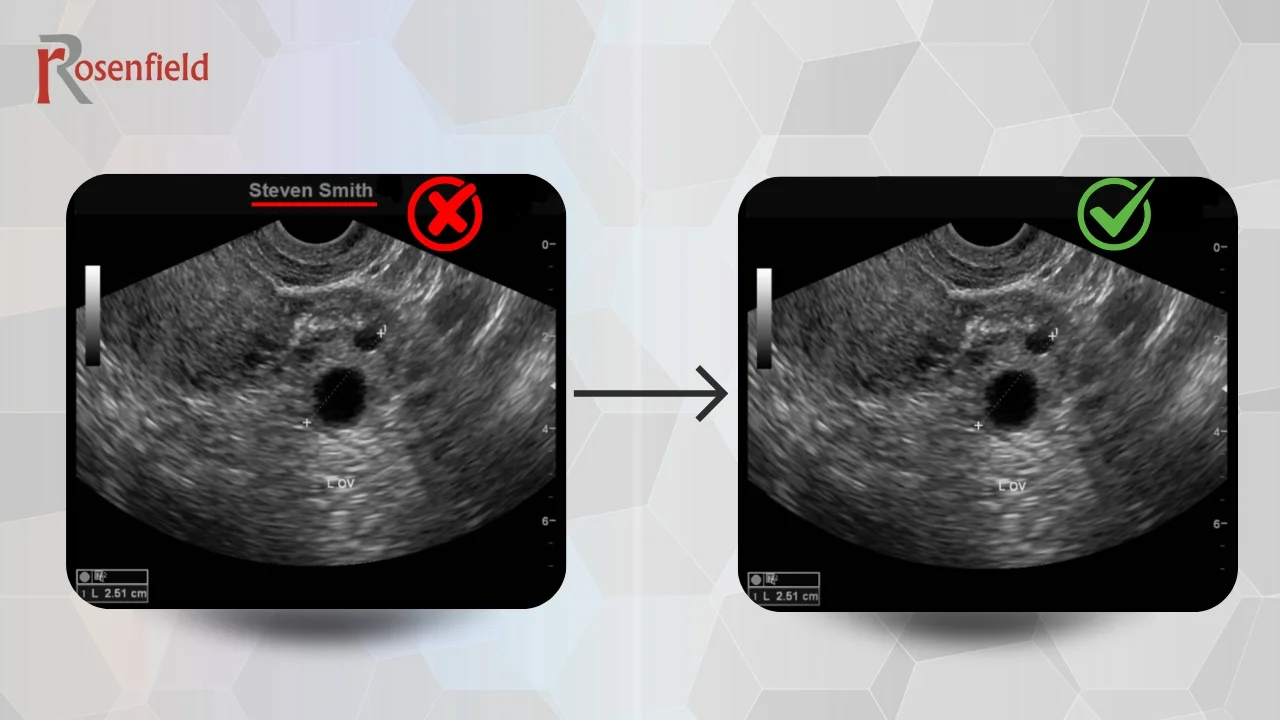
Medical images have become an important source in the process of diagnosing a patient’s condition as well as developing a treatment plan for them. With the increasing importance of medical images, their sharing across medical platforms has increased, and maintaining the confidentiality of patient data and preventing the chance of identifying them has become extremely important. Hence, the importance of using anonymisation tools has emerged. These are advanced solutions aimed at removing or modifying the identifying information attached to the images, which allows for maintaining privacy, and also making the necessary data on which scientific research is based available.
What are image anonymisation tools and why do they matter?
Anonymisation tools are advanced software solutions used to remove or modify data that can be used to reveal the identity of patients, making them untraceable or linkable to any specific person. For example, medical image anonymisation tools in theUK work to convert sensitive patient data into completely anonymous data, which provides complete privacy.
The importance of these tools lies in facilitating the use of medical images and data by medical and research institutions, with full commitment to information protection regulations and avoiding any breach of confidentiality. Without the use of anonymisation, sharing data in medical research or training artificial intelligence models is accompanied by legal as well as ethical risks. The degrees of protection and security vary according to the technology used, as follows:
- Anonymisation: It means the removal of all information that can be used to identify a person permanently and irreversibly.
- Pseudonymisation: It means the process of replacing original identifiers with temporary symbolic identifiers. The original identity can be retrieved if the linking key is available. Accordingly, this data is considered subject to personal information protection laws.
Key features of good anonymisation tools
It can be said that any anonymisation system must have basic qualities such as protecting privacy, maintaining data confidentiality, and preserving the analytical value of the data while ensuring operational efficiency. The ideal tool quickly anonymises DICOM image deidentification software, removing all personal identifiers accurately. It maintains the original image quality, supporting medical research and AI development.
In the pursuit of achieving the highest levels of efficiency and accuracy in managing medical data, advanced solutions have emerged that are capable of handling huge amounts of images with high efficiency. One of the most prominent of these technologies is the BriX tool, which is a vendor-neutral system designed to perform large-scale medical image anonymisation operations with enormous speed and accuracy.
Instead of using manual methods prone to errors, BriX allows PACS system administrators and medical researchers to process large numbers of medical studies in a matter of minutes, by modifying DICOM files or the pixel data itself. Thanks to the smart engine and detailed reports provided by this tool, we find that human errors are reduced to the lowest possible extent, while ensuring complete anonymisation.
Comparing open-source vs commercial tools for anonymisation
When heading to implement an effective image anonymisation system, institutions face two main options: either relying on open-source solutions or investing in paid commercial software. Each system has advantages and disadvantages, and the choice between free vs paid anonymisation tools is made according to the needs of the institution and the available budget. The following is a further explanation of these tools.
Open-source tools
These tools are ideal if the budget is limited or for cases that require high customisation with the availability of an executive team capable of management. They are characterised by several advantages, such as:
- They consist of flexible DICOM anonymisation software packages that can be customised to build the institution’s own anonymisation system.
- They are free or low-cost, which makes them ideal for projects with limited resources.
- They allow the user full control over the working mechanism, but they require high technical expertise.
Commercial tools
Commercial tools are the optimal choice if the institution is looking for speed and reliability and needs certified tools to process large data. They are characterised by several advantages, such as:
- Ready-made and integrated solutions that institutions can rely on completely.
- They include dedicated technical support, as well as advanced features for privacy and compliance with regulations such as GDPR.
- They offer ease of use through clear graphical interfaces.
Legal & regulatory concerns (GDPR, UK laws)
The processing of personal data in Europe is done within a strict legal framework set by the General Data Protection Regulation (GDPR), alongside the UK Data Protection Act of 2018. These legislations define personal data as information through which a living individual can be identified directly or indirectly. The crucial point in these laws is that they do not apply to completely anonymous data, from which all identifiers have been removed and cannot be retrieved. In this case, the use and sharing of data are freely permitted without the need to obtain consent from individuals. However, in the case of data that has undergone a pseudonymisation process, we find that it remains classified as personal data and the same regulatory requirements apply to it.
To ensure full compliance with the law, it is recommended to rely on GDPR compliant anonymisation tools for radiology. This is because these tools adhere to precise standards for removing all identifiers and are also subject to tests such as the Motivated Intruder Test, which is used to assess the possibility of re-identifying individuals using available resources by a person well-versed in this field.
How anonymisation tools integrate with PACS and research workflows
The most important thing that has been focused on is the necessity of smooth interaction between anonymisation tools and medical systems. The effective tool is one that can be easily integrated within the digital infrastructure of the medical institution. After anonymisation software comparison, we find that BriX is a perfect model for this, as it easily connects to healthcare PACS solutions, as well as clinical trial servers, to perform the automatic anonymisation of DICOM images, without the need for any additional intervention or the use of other tools.
Use cases: sharing data for research safely
Enabling scientific research is one of the most important areas of use for anonymisation tools. Researchers often need huge sets of medical data to use in training artificial intelligence algorithms or conducting statistical studies, but privacy laws limit the possibility of direct access to the required data.
However, with the enormous development in medical technologies, bulk anonymisation tools have come to play an effective role in providing anonymous copies that can be safely shared with research teams around the world without compromising privacy. Accordingly, the BriX tool is an ideal tool because it provides researchers with huge amounts of data and DICOM images and processes them with high speed and accuracy.
Conclusion
Anonymisation tools have become an indispensable element in the digital world of healthcare. They enable medical institutions to benefit from radiology data and medical images without compromising patient privacy. Especially with the increasing reliance on artificial intelligence, the need to secure data and anonymise it automatically and smoothly through advanced tools such as BriX has increased, which has become an ideal tool that combines efficiency and accuracy, making it easier to conduct medical research while maintaining the security and confidentiality of data.
For tailored AI and anonymisation solutions that fit your radiology workflow, contact us at Rosenfield Health today.
FAQs about Dicom Anonymisation Tools
What does an image anonymisation tool do?
An image anonymisation tool works to remove or modify all data through which a patient's identity can be accessed. It is very necessary to ensure the possibility of sharing and using images in medical research without breaching privacy.
Are anonymisation tools compliant with UK laws?
Yes, most modern tools are designed to be compliant with data protection regulations, most importantly the General Data Protection Regulation (GDPR), as well as the UK Data Protection Act of 2018, which ensures the safe use of medical data.
Do anonymisation tools affect image quality?
No, in most cases when using a professional tool, personal data is removed without compromising the quality of the image, which preserves its accuracy and quality for analysis and research.
Can anonymised data be used for research and AI?
Yes, anonymous data is widely used in training artificial intelligence algorithms because it is not considered personal data after all identifiers have been removed from it.
What is the difference between anonymisation and pseudonymisation?
Anonymisation means removing all identifiers permanently and irreversibly, while pseudonymisation refers to replacing identifiers with codes that can be retrieved later, which means they are still subject to data protection laws.
