

Does an MDT meeting mean cancer?

Once you know that an MDT meeting will involve discussing your test results, it raises a lot of anxiety along with many questions in your mind, including: Does an MDT meeting mean cancer? The truth is surprising because if your case is part of a multidisciplinary team meeting, it may not be dangerous at all. In some cases, it may be serious, but in both cases, it is an indicator that you are receiving a high level of medical care, whatever the disease you are suffering from.
Meaning of MDT Meeting in Medicine
Before answering “Does an MDT meeting mean cancer?”, we would like to say that MDT stands for Multidisciplinary Team. MDT meeting meaning in radiology is a group of elite doctors officially meeting to discuss your case from all aspects. The goal is to develop the appropriate treatment plan with great accuracy, instead of building a treatment plan based on the opinion of only one doctor.
This concept is built on a strong idea because the best treatment decisions are those made by several doctors with great experience in the specialisation. The entire case is reviewed, including medical history, imagining analysis, and personal circumstances, to reach a clear and appropriate treatment plan.
How does technology improve MDT meetings?
Despite the important role played by multidisciplinary team meetings, they are often difficult to implement due to obstacles related to the organisation process, as well as problems related to time, work efficiency, and quick access to data. In the traditional model, doctors had to open different systems separately, such as the Trust system, the radiology system, and the manual patient data search system. This process wastes a significant amount of time and reduces the effectiveness of the system.
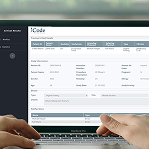
However, digital solutions like the iCode MDT platform have reshaped this process by gathering all information sources into a single interface that allows smooth access to patient data. The most important feature is that they are regional solutions capable of connecting more than one Trust. In addition, they are vendor-neutral, which allows them to integrate with the technical infrastructure regardless of the provider company, increasing their flexibility and operational value.
Features of iCode MDT
This technology is characterised by several features, including:
Easy retrieval of medical history and case discussions
In the traditional model, it is difficult to access previous discussions or follow the progression of the patient’s condition. This hinders the process of making an accurate treatment decision. However, modern platforms provide the idea of an interactive timeline that includes everything related to the patient’s condition in one place, with the ability to search and categorise by specialisation or case type, making it easier for doctors to discuss cases.
Sharing meeting results easily
Traditional meetings take a long time to send decisions to different departments and archive them. However, digital solutions enable the team to share decisions and recommendations directly with one click. It integrates with PACS or other medical information systems that feature communication standards like Dicom Anonymisation Tools and HL7.
Reducing the administrative burden on the MDT coordinator
These systems rely on automation for scheduling, follow-up, and notifications, integrating with MS Teams and Outlook. This saves time and allows the medical team to focus on priority tasks.
Supporting regional MDTs
Some Trusts may lack certain specialists needed for complex cases. This feature allows these Trusts to connect easily with experts from other centres, enabling collaboration across regions. It ensures patients get access to the right expertise regardless of their location, and helps doctors make more informed decisions by consulting with the best available specialists.
Who are the members of the Multidisciplinary Team?
The members of the multidisciplinary team vary depending on the case being discussed, but it often contains some professionals, including:
- Consultant doctors and surgeons: They are considered the foundation and the pillar of the clinical decision.
- Radiologists: They read what the CT scans contain and reveal all information that cannot be seen with the naked eye.
- Pathologists: They determine the degree of the disease after explaining the results of cells and tissues.
- Oncologists: They present the appropriate treatment method away from surgical intervention.
- Specialist Nurse: This role is considered your real voice by clarifying all your priorities and fears during the meeting.
- Other specialists: Specialists can be used depending on your condition, whether a social worker or a physiotherapist.
Does saying “MDT meeting” always mean cancer?
For those asking “Does an MDT meeting mean cancer?”, the answer is no. Although this type of meeting is commonly used in oncology, it is also used in various other medical specialisations, whether heart or mental health, where the case is discussed and distributed to a team of doctors. When your case is discussed in this meeting, this should reassure you because the best experts are trying to reach an appropriate treatment plan and correct diagnosis to help you recover and reach safety.
Uses of MDT meetings beyond oncology
MDT meetings are not limited only to oncology, but the matter extends to include many other specialisations, including:
- Rare cases that require many specialisations.
- Cognitive disabilities and mental health.
- The most difficult heart diseases.
- Dementia and memory diseases.
- Cases of exposure to strokes and blood clots.
- Healthcare assessments.
We would like to note that these specialisations are a strong indication that the MDT is a thinking methodology and not just a procedure for a specific disease only.
Why MDTs are so associated with cancer care
In the early twentieth century, doctors found a difficult disease that could not be cured easily, which is cancer. Therefore, the matter required actual participation between different specialisations, whether surgeons, radiologists, or oncologists. Indeed, those meetings were held and were able to reach accurate decisions and achieved great effectiveness in improving recovery rates from this disease.
Thus, the multidisciplinary team meeting in cancer became the gold standard for treating the disease. After that, the idea became common, and those meetings were held for various other specialisations due to their tremendous results. However, the association of the concept of these meetings with cancer is still the strongest to this day.
How MDT meetings work in non-cancer specialties
Whatever your imagination, the behind-the-scenes of an MDT meeting in Trust is more disciplined and organised. Matters in meetings proceed as follows:
- Medical Stage: The doctor clarifies the presence of a difficult case that must be discussed while collecting all its reports and medical history.
- Scheduling Stage: One of the meeting coordinators schedules the cases, arranging and organising them according to priority.
- Preparation Stage: This is done through a notification sent to all participants to know the complete information about the patient and review it before the meeting.
- Conference Stage (Actual Meeting): At this stage, the meeting begins, and the case is presented. Then, the participants’ opinions regarding the treatment plan are matched after:
- Clarifying the vision of the case by each specialist.
- Explaining the biopsy results by the pathologist.
- The nurse presents the concerns and point of view of the patient.
- Completion Stage: A final report is written clarifying the recommendations of all participating doctors, and then it is discussed with the patient.
How to ensure your priorities reach the meeting?
The absence of the patient in the meeting is a big challenge. The possibility of making an important decision without knowing the patient’s need and desire constitutes a big problem for the patient later. For example, participating doctors might assume that maintaining the patient’s ability to continue working or caring for their family is not a priority, but this could be crucial for the patient due to their personal responsibilities. Therefore, ensure that you are an actual part of the decision by:
- Communicating with one of the doctors or the nurse before the meeting to clarify your interests, the lifestyle you follow, your fears, and the challenges you are worried about facing later.
- Sending an email to the doctor asking to ask some questions during the meeting or clarifying points that need to be considered when discussing the treatment plan.
- You must not assume that the team will be aware of all your needs and your life. Therefore, be honest in clarifying everything related to you because that will affect you later.
Conclusion
Finally, for everyone asking “Does an MDT meeting mean cancer?”, we want to reassure you that it does not. MDT (Multidisciplinary Team) meetings bring together experts from various medical specialties to review cases comprehensively and determine the most effective, personalised treatment plan. Their purpose is to ensure accuracy, improve outcomes, and support patient healing and recovery—not to indicate a specific diagnosis.
If you’d like to learn how Rosenfield Health can support your organisation with advanced MDT solutions and clinical workflow tools:
👉 Get in touch with Rosenfield Health or book a demo today to see how our technology can streamline your medical decision-making and improve patient care.
FAQs
Does MDT meeting mean I have cancer?
No, because MDT meetings have become associated with many other specialisations to discuss complex cases, whether the result is malignant or benign, with the aim of obtaining the best treatment plan.
How long does it take to get results from a MDT meeting?
There is no specific time, but after a certain period from the meeting, the results are discussed with you after obtaining the final team recommendation.
Is MDT serious?
It can be said that it is serious and very important, as it is an indication of the necessity of discussing your case and evaluating it by several experts, but it does not mean that you suffer from something serious.
