

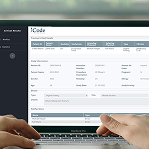
Radiology Peer Review Software

Ensuring diagnostic quality in modern radiology departments relies on peer review to continuously evaluate the accuracy of medical reports. A qualified radiologist reviews a colleague’s report and matches it with the available medical images to discover any potential errors. These discovered errors turn into valuable educational opportunities that raise the efficiency of the entire medical staff when applying the peer review radiology reporting process systematically and deliberately. Leading trusts and medical centres currently work on integrating radiology peer review software into the daily workflow to ensure their sustainability and directly improve healthcare outcomes for patients.
Why Manual Peer Review Processes Are No Longer Sustainable for NHS Radiology Departments
Traditional radiology departments suffer from relying on manual methods that consume a long time and lead to wasting valuable clinical resources. These major operational challenges impose the necessity of an urgent transition towards using advanced NHS radiology peer review software that guarantees fully automating the process. The problems of manual review appear in several basic aspects including the following:
- Tracking cases and documenting discrepancies across paper documents or insecure emails requires a huge administrative effort.
- This scattered methodology causes the loss of many important educational cases and increases the exhaustion of radiologists burdened with increasing daily workloads.
- Registrars and consultants report losing significant time each month to manual case-finding and preparation for these reviews.
- These methods lack accurate tracking mechanisms that ensure closing the quality loop and continuous clinical performance improvement.
What Radiology Peer Review Software Does — and What It Doesn’t Do
Modern software offers radical solutions to manage radiology departments and develop doctors’ performance through specific and directed functions. The roles of Radiology Discrepancy Tracking Software programmes are represented in the following important points:
- They work on fully automating the workflow through automatic pulling of cases and distributing them to reviewing doctors to save time.
- They provide accurate analytical dashboards to monitor clinical performance and discover opportunities for learning from diagnostic errors.
- They offer reliable statistics that support continuous professional development and direct training towards the specific weaknesses in the department.
- They are specifically designed to build a supportive educational environment focusing on improving the quality of medical reports and raising the efficiency of the entire staff.
- They avoid performing any punitive role or personal evaluation that harms trust among colleagues to support the culture of shared learning and protect the doctor’s independence in decision-making.
Six Essential Features of Effective Radiology Peer Review Software
The success of any technical system for evaluating radiologists requires the availability of a set of technical and clinical characteristics that ensure its effectiveness and positive impact. These basic features branch into six core points:
1. Seamless Integration with PACS and RIS Systems
Effective software integrates directly inside the Picture Archiving and Communication Systems and the Radiology Information System to provide a unified user experience. This integration ensures the doctor does not need to open separate applications or enter patient data manually, which speeds up the review process and prevents distraction.
2. Complete Data Anonymisation
Protecting the identity of the report writer doctor and the reviewing doctor represents a basic pillar for ensuring the objectivity of the evaluation. Advanced programmes provide encryption mechanisms that hide all doctors’ and patients’ names to prevent any personal or professional bias resulting from relationships in the workplace.
3. Random and Targeted Case Pulling Mechanisms
The comprehensive evaluation process requires the programme’s ability to pull a specific percentage of reports completely randomly to prevent doctors from picking easy cases. Advanced systems also allow pulling targeted cases for certain sub-specialities or complex scans to evaluate a specific quality level.
4. Objective and Accurate Evaluation Metrics
Successful systems rely on accurate scientific metrics to classify diagnostic discrepancies and bypass old and unreliable numerical scoring systems. Programmes use detailed metrics such as true positive, true negative, false positive, and false negative (TP/TN/FP/FN) to provide accurate and analysable data.
5. A Blame-Free Environment that Supports Shared Learning
Digital peer review radiology platforms are designed to enhance the culture of peer learning and turn errors into opportunities to develop the department. These programmes provide interfaces that support constructive scientific discussion and document difficult cases to share them in periodic educational meetings.
6. Instant Notifications and Automatic Feedback
Effective software ensures sending quick and automatic alerts and feedback to the original report writer immediately upon discovering any substantial discrepancy. This feature helps in correcting the treatment pathway for the patient instantly and accelerates the professional learning process for the doctor.
How to Evaluate Radiology Peer Review Software for NHS Procurement
Information technology departments and procurement teams in trusts need strict evaluation criteria when purchasing new systems to ensure their compatibility with the current infrastructure and security requirements. The evaluation process of Radiology peer review programme for NHS Trusts relies on the following strong criteria:
- Providing flexible deployment options including cloud solutions or local hosting according to the security policies followed in the institution.
- Verifying the programme’s compliance with the Digital Technology Assessment Criteria (NHS DTAC) standards and obtaining the required cybersecurity certificates to protect sensitive health data from breaching.
- Applying the vendor-neutrality principle to grant the trust the freedom to integrate the system with any medical imaging devices without being restricted to one company’s products.
- Providing advanced Radiology Peer Review Audit Software programmes for comprehensive audit logs that prove to regulatory bodies the department’s commitment to applying quality standards continuously and documentedly.
RCR Standards: What Your Radiology Peer Review Software Needs to Support
The Royal College of Radiologists sets mandatory directives requiring trusts to integrate peer review in radiology within the daily workflow to ensure the highest levels of clinical governance and patient safety. Modern RCR Peer Review Tools support these requirements through the following characteristics and practices:
- RCR guidance recommends incorporating peer review into routine clinical practice as part of a continuous quality improvement process, without prescribing a fixed time per case reviewed.
- Imposing the necessity of documenting any difference in medical opinion accurately to preserve the rights of patients and doctors.
- Using diagnostic discrepancies data in periodic clinical learning meetings to discuss complex cases and develop solutions for them.
- Providing ready templates to record discrepancies and create automatic compliance reports that prove the department’s compatibility with the applicable national guidelines.
How iCode Peer Review Delivers Automated, RCR-Aligned Peer Review for NHS Trusts
Trusts require integrated technical solutions to establish strong and reliable review programmes that keep pace with modern requirements and relieve burdens on doctors. The iCode Peer Review platform from Rosenfield Health Company provides a comprehensive and vendor-neutral digital solution designed specifically to meet the technical and clinical needs of advanced radiology departments, fully aligned with RCR standards and configurable to support additional frameworks including ACR where required, by providing the following exclusive features:
- Direct and smooth integration inside current PACS systems to provide a simple user experience that supports unified authentication to facilitate doctors’ entry and accelerate the review process exceptionally.
- Ensuring full anonymisation according to strict DICOM standards to provide a completely objective evaluation environment free from professional biases.
- Providing an anonymous chat feature that allows discussing medical notes efficiently and completely confidentially between doctors to accelerate reaching the final diagnosis.
- Customising scorecards to align completely with the standards of the Royal College of Radiologists and the American College of Radiology to suit trust protocols.
- Analysing results accurately through the comprehensive system statistics to support continuous education and raise report accuracy to ensure the highest levels of sustainable clinical performance.
Which companies offer cloud-based radiology peer review solutions?
Healthcare officials search for technology providers who possess a deep understanding of clinical workflow needs and medical compliance standards. Leading companies in this field are characterised by providing vendor-neutral cloud solutions capable of adapting to the diverse infrastructure of trusts.
The ability to provide smooth integration, advanced data protection, and complete anonymisation is considered among the most important criteria determining the efficiency of these companies in the market. Rosenfield Health Company tops this field by providing innovative and reliable solutions through its iCode Peer Review platform which meets all complex requirements and provides a safe and advanced educational environment for radiologists to improve diagnostic quality sustainably.
Are you seeking to modernise your infrastructure and apply approved medical quality standards efficiently and smoothly inside your radiology department? Contact us today at Rosenfield Health Company to request a demo to discover how the iCode Peer Review platform can automate your workflow and ensure providing healthcare based on accuracy, excellence, and complete compliance.
Conclusion: Investing in Medical Care Quality
Relying on automated peer review systems is considered an inevitable strategic step to modernise the infrastructure of radiology departments and elevate the quality of medical diagnosis noticeably. These advanced software programmes provide a reliable work environment ensuring full compliance with medical standards, protecting patients’ data, and supporting the continuous professional development of doctors through accurate analytical tools that prevent the recurrence of clinical errors.
FAQs
What Is Radiology Peer Review Software?
They are advanced software applications used to automate the evaluation process of diagnostic radiology reports by pulling cases randomly and distributing them to reviewing doctors. These programmes work on documenting discrepancies and providing automatic feedback to support shared learning and improve the quality of care provided to patients.
Is Radiology Peer Review Software Required for NHS Radiology Departments?
Yes, these software programmes are very necessary to meet clinical governance requirements and the Royal College of Radiologists' directives which impose evaluating individual and institutional performance regularly to ensure patient safety and reduce diagnostic error rates.
Which RCR Standards Should Radiology Peer Review Software Support?
The system must support documenting diagnostic discrepancies clearly, facilitate peer review as an integral part of routine clinical practice in line with RCR guidance, and provide accurate analytical data supporting clinical learning meetings and demonstrating the department's commitment to continuous quality improvement.
Can Radiology Peer Review Software Integrate with Existing PACS and RIS Systems?
Advanced and vendor-neutral platforms integrate completely smoothly with current picture archiving and radiology information systems to provide a unified user interface preventing the need to navigate between multiple applications and accelerating the daily evaluation process.
Which Metrics Should Radiology Peer Review Software Track?
Modern systems track accurate scientific metrics including true positive and negative and false positive and negative (TP/TN/FP/FN) to provide objective and real data directing professional development and raising the efficiency of doctors accurately and reliably.
